

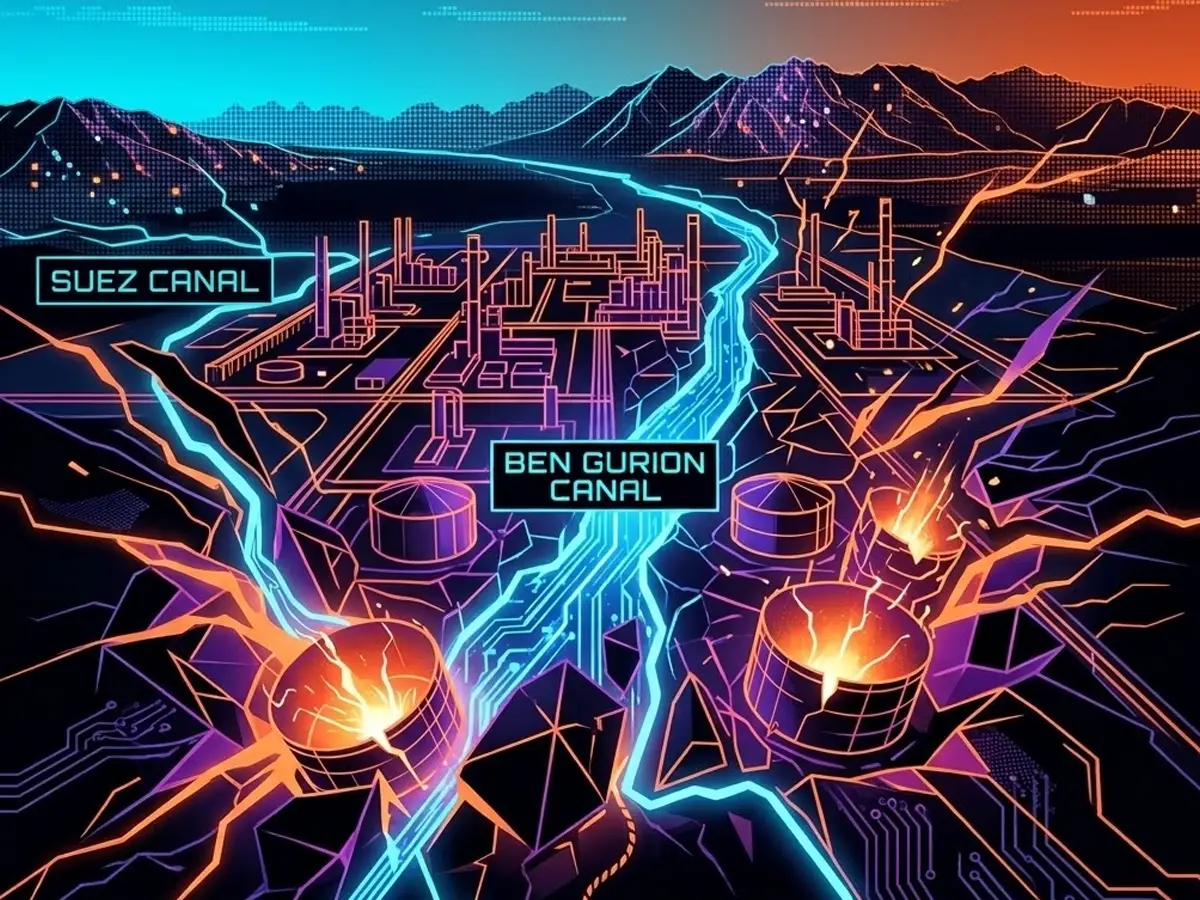
When Netanyahu stood in front of international media on Day 20 of the Iran war and announced his vision for oil pipelines running through the Middle East straight to Israeli ports, most people missed it.
The headline that day was missiles and death tolls. But that single statement, buried in a press conference, is the most honest thing any leader has said about this entire conflict. It tells you everything you need to know — not just about the Iran war, but about Gaza, the Abraham Accords, and what has really been happening in the Middle East since October 7th 2023.
I want to walk you through something. Not a theory. A map.
The Canal Nobody Told You About
In the 1960s, Israel proposed building a canal connecting the Red Sea to the Mediterranean Sea. They named it the Ben Gurion Canal, after Israel's founding prime minister. The route would start at Eilat — Israel's southern port city on the Red Sea — run through the Negev Desert, and terminate near Ashkelon on the Mediterranean coast.
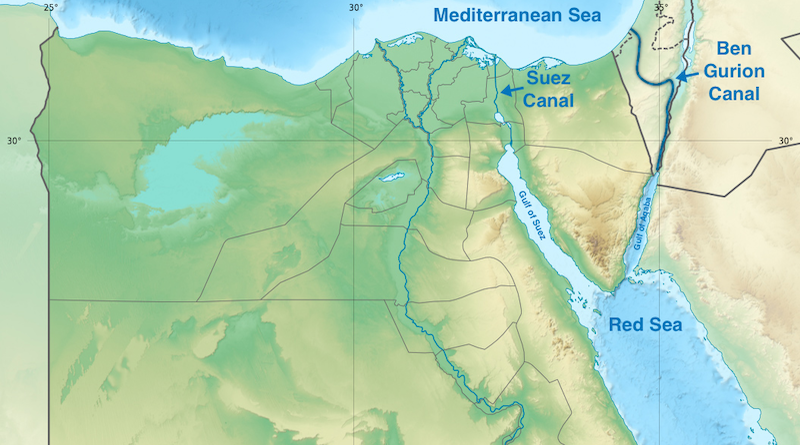
If built, this canal would be longer than the Suez Canal and capable of handling the world's largest ships in both directions simultaneously. Right now, roughly 12% of all global trade passes through the Suez Canal, which Egypt controls. The Ben Gurion Canal would compete directly with that — and potentially replace it.
Here's how badly the United States wanted this built: declassified documents from 1963 show the US actually proposed using 520 nuclear bombs to blast the canal route through the Negev Desert. That's not a typo. Nuclear explosives. To dig a canal. That's how strategically important this project was considered.
So why didn't it get built? The short answer is Gaza.
The canal route runs directly beside — and in some proposed versions, straight through — the Gaza Strip before reaching the Mediterranean near Ashkelon. In April 2021, Israel quietly announced that construction was expected to begin by June of that year. It never did. Two million Palestinians were living in the way.
October 7th Was the Starting Gun
I'm not going to tell you what to believe about October 7th. What I will tell you is what happened in the months and years just before it, because the timing is hard to ignore.
In 2020, the Abraham Accords were signed — the normalization agreements between Israel and several Arab states, brokered by the Trump administration. Everyone celebrated it as a historic peace deal. But look at what happened the same year on the infrastructure side: Israel's state-owned Europe Asia Pipeline Company and a UAE company called MED-RED Land Bridge quietly signed an agreement to use the existing Eilat-Ashkelon pipeline to transport oil from the Red Sea to the Mediterranean.
The peace deal and the pipeline deal happened in the same year. The corridor was already being activated.
Then in April 2021, the canal construction announcement came and went. Nothing happened. Gaza was still there.
Then October 7th happened. And within weeks, Israel began the most extensive military campaign in Gaza's history — systematically moving the population south, bombing the north into rubble, and reoccupying territory it had withdrawn from years earlier. Multiple analysts at the time noted that the reoccupation of Gaza was exactly what certain Israeli politicians had been waiting for to revive the canal project. That's not a fringe observation. It's documented.
I'm not saying October 7th was staged. I'm saying the response to it was disproportionate in a way that only makes sense if the objective was geographic, not military.
The Iran War Is Phase Two
Here's the problem with a canal running from Eilat to Ashkelon: it's only valuable if Gulf oil and gas can safely flow into it. And for the past several decades, the single biggest threat to Gulf shipping has been Iran. Iran's missiles, its navy, its ability to close the Strait of Hormuz — all of it sits directly in the path of any viable Gulf-to-Israel energy corridor.
You can't build a $100 billion canal and then have Iran threaten to shut down the shipping lanes that feed it. The canal only works commercially if Iran is defanged.
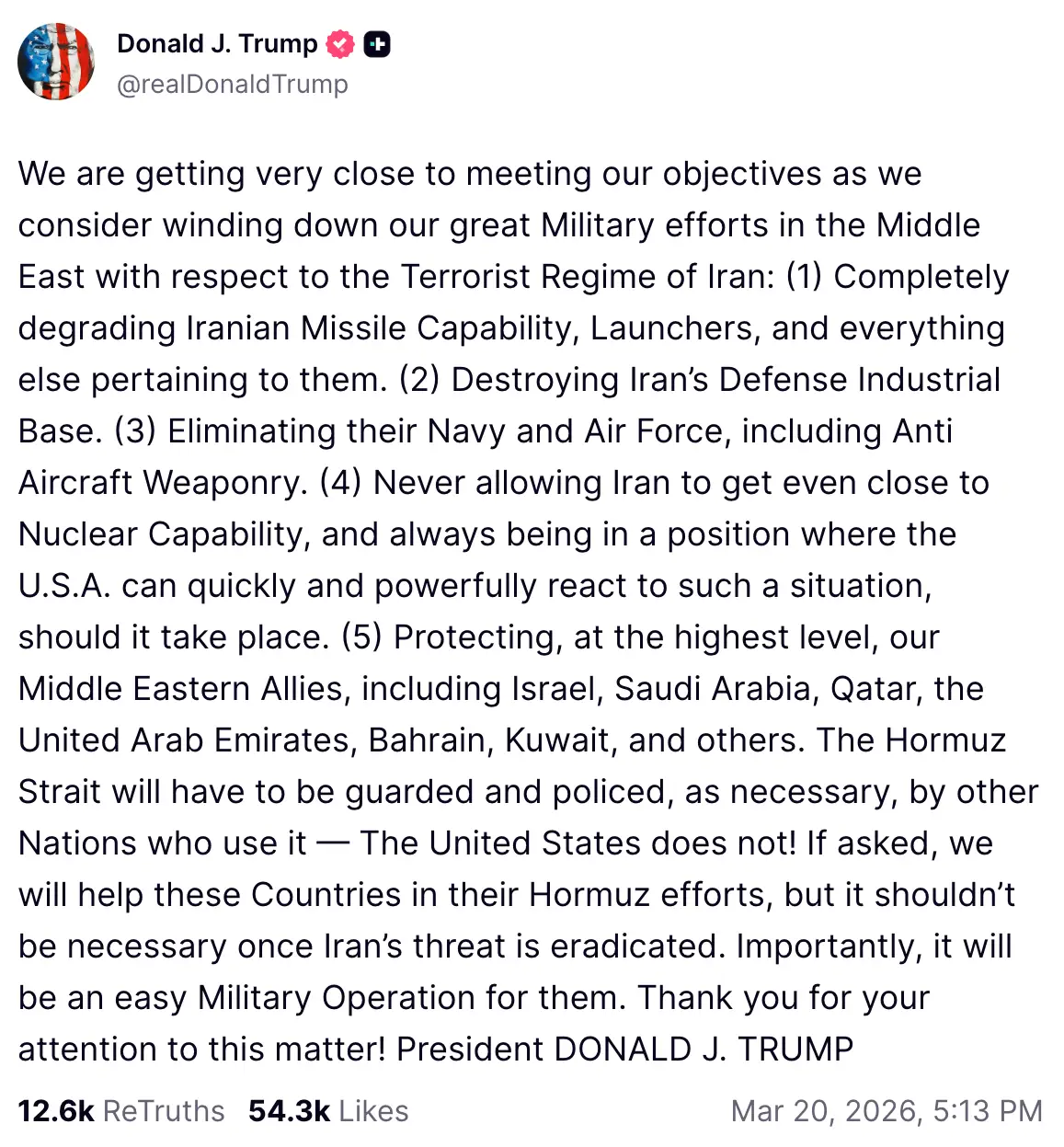
On February 28th 2026, the US and Israel launched joint strikes on Iran, killing the Supreme Leader and systematically destroying Iran's military infrastructure — missiles, launchers, navy, air force, nuclear facilities. Trump's stated objectives were exactly those five things. No political vision, no rebuilding plan, no democracy promotion. Just military neutralization. A demolition contract.
What struck me as I followed the war day by day was what Iran was and wasn't targeting. They hit population centers in Israel. They hit US bases across the Gulf. They hit energy facilities in Qatar, Saudi Arabia, and Abu Dhabi. But they didn't systematically target Haifa port or Eilat — the two endpoints of the existing pipeline corridor and the logical terminus of any future canal. The infrastructure that matters most for the post-war architecture was largely preserved by both sides.
Make of that what you will.
Who's Actually Paying For This
Wars are expensive. The US was burning through an estimated $1-2 billion per day in the opening weeks. Israel was losing $3 billion a week just in economic damage. The munitions alone are staggering. Someone is financing all of this, and it isn't the American taxpayer voluntarily.
But here's what I think people miss: the real money isn't in the war. The real money is in what comes after.
A canal connecting the Red Sea to the Mediterranean — bypassing the Suez Canal — is a $100 billion construction project. The pipeline infrastructure to feed it, the port expansions at Eilat and Ashkelon, the new cities Israel has proposed building along the canal route, the energy contracts, the shipping fees — we're talking about hundreds of billions of dollars in infrastructure investment flowing into a corridor that transnational capital will underwrite and own.
The Eilat-Ashkelon pipeline already exists and was already activated through the UAE deal in 2020. The canal is the scaled-up version of what's already operational. Gulf sovereign wealth funds partnered with Western financial institutions are the obvious underwriters. This isn't speculation — the financial architecture is already partially built. The war is just clearing the remaining obstacles.
What Comes After the Smoke Clears
If this plays out the way the geography and the financial incentives suggest, here's what the Middle East looks like on the other side of this war.
Israel becomes the Mediterranean outlet for Gulf energy. Strategically indispensable, economically integrated with the GCC countries it once had no formal relations with. The Israeli society that absorbed years of war damage may be hollowed out — hundreds of thousands have already left — but the geography wins regardless of who's living there.
Saudi Arabia completes normalization with Israel. Not because of any theological breakthrough, but because the pipeline politics make it inevitable. The canal needs Saudi oil flowing into it. Saudi Arabia needs a Mediterranean outlet that doesn't depend on the Suez Canal or Iranian goodwill. The deal makes itself.
Egypt quietly loses its most important geopolitical asset. The Suez Canal currently generates nearly $10 billion a year for Egypt. A viable competing canal route through Israel doesn't eliminate Suez overnight, but it breaks Egypt's monopoly and its leverage. Nobody in the media is talking about what this does to Egypt, but it's one of the most significant consequences of all of this.
And the people who were told this entire decade of conflict was about terrorism, nuclear weapons, and spreading democracy? They're left holding the bill. The US debt from this war alone could hit $65 billion by some estimates, on top of everything that came before it. The American taxpayer financed the demolition. Someone else will finance — and own — the reconstruction.
I want to be honest with you. I don't have a classified document proving that a room full of executives mapped all of this out on a whiteboard in 2019. What I have is a map, a sequence of events, a pipeline deal, a canal route, and a prime minister who stood in front of cameras on Day 20 of a war and told you exactly what he was building.
Sometimes the most important things aren't hidden. They're just said in the middle of a press conference that nobody was paying attention to.
