

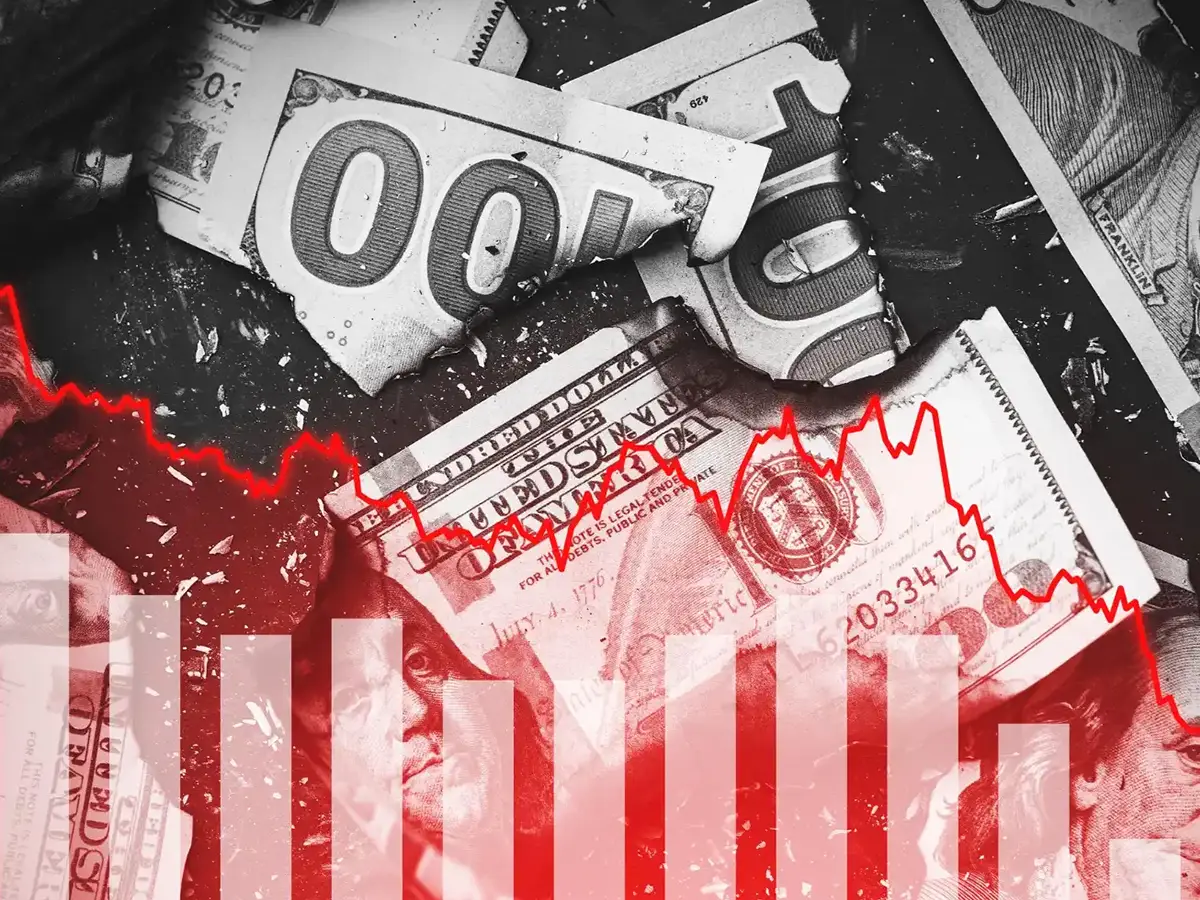
You're not just dealing with high prices at the grocery store. This isn't another recession like 2008, and it's not some temporary inflation spike that the Fed will fix with a few interest rate tweaks. What we're watching right now is the breakdown of the entire system that's run the world since the end of World War II.
I know that sounds dramatic. But stay with me, because those who understand what's actually happening will protect themselves and their families. Those who keep believing the old stories about how the economy works are going to get crushed.
The Lie We've Been Living
For the past 80 years, we've been told a simple story: America protects the world with its military, the world uses American dollars for trade, and everyone wins. Globalization meant you could buy cheap stuff made in China, corporations grew massive, and we all lived in this connected "global village" where borders didn't matter.
That story was always a scam, but it's taken decades for the consequences to become obvious.
Here's what actually happened: American jobs moved to China and Southeast Asia. We stopped manufacturing almost everything. Our economy became financialized—we don't make things anymore, we just export dollars and debt. The big corporations got obscenely rich. The middle class got hollowed out. And now the deal that held this whole arrangement together is breaking apart.
Countries around the world are realizing they got a raw deal. They made our stuff, we paid them in paper that we can print infinitely, and we told them to be grateful for it. That arrangement is ending, and when it does, everything changes.
The Davos Declaration Nobody Talked About
Earlier this year at the World Economic Forum in Davos, Mark Carney said something that most people missed. Carney isn't some random commentator—he was the Governor of the Bank of Canada and then the Bank of England. When he speaks, people in power listen.
He said: "If the US no longer wants to lead, then Canada and the West will."
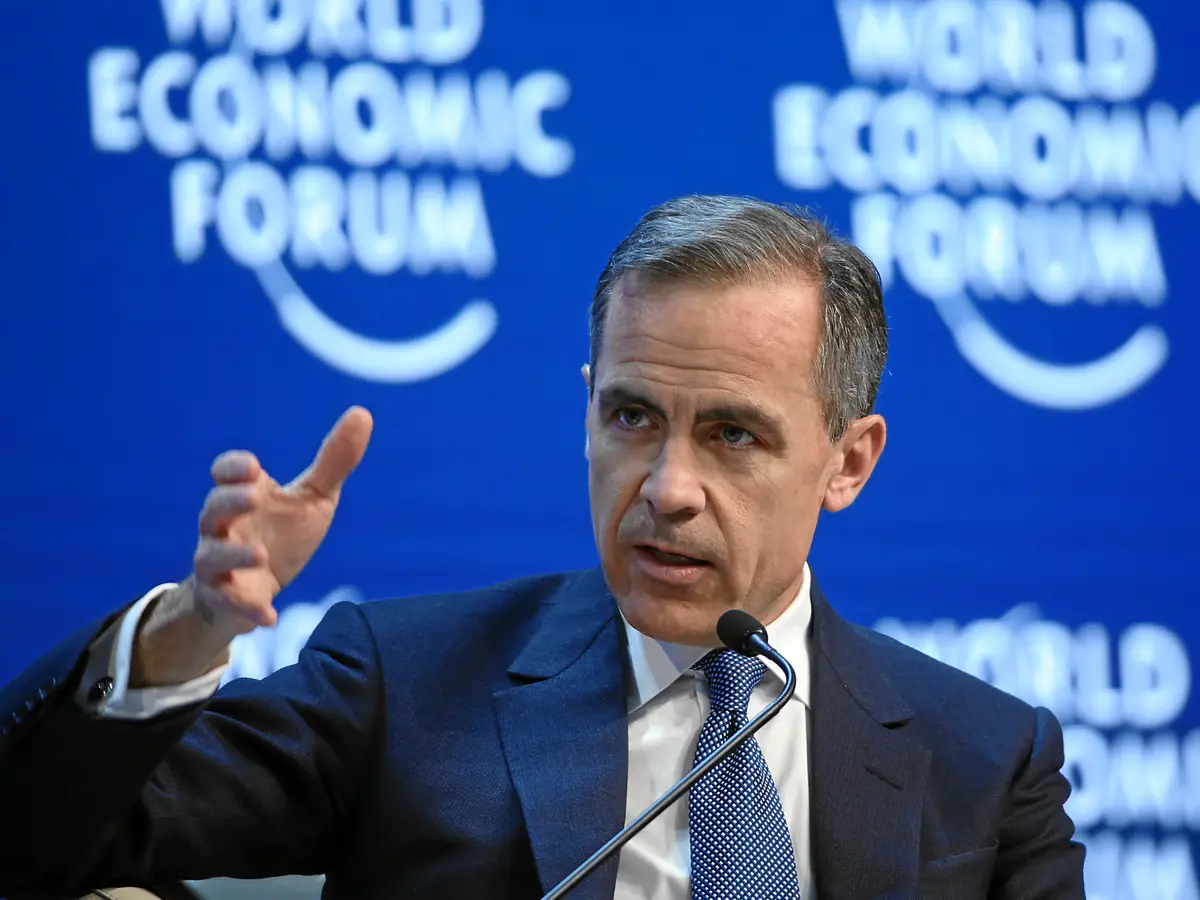
That's not just a quote. That's a declaration that the era of American-led globalization is over. We're entering an age of economic nationalism. Every country wants its own factories, its own food supply, its own energy independence. They don't want to depend on complex global supply chains that can break at any moment.
The result? Prices are going to keep rising. Supply chains will stay fragmented. Trade wars will escalate. That t-shirt or loaf of bread you buy is going to cost a lot more, because the cheap globalization model is dead.
The Theft You Don't See
Let me explain something about inflation that nobody in power wants you to understand.
Money is supposed to work like a battery. You do work today, you get paid, and you store that value to spend later. That's the entire point of currency—it's a way to save your time and effort.
When the government prints money, they're drilling a hole in that battery and stealing your stored energy. It's not complicated, and it's not a conspiracy theory. It's just math.
Here's a concrete example: In the 1960s, if you worked one week at minimum wage, you could buy one ounce of gold. Today, you'd need to work 20 consecutive weeks to buy that same ounce. The gold didn't change. Your dollar did.
The dollar has lost 98% of its purchasing power over the last several decades. This isn't an accident or bad luck. The system was designed to turn you into a hamster on a wheel—the faster you run, the faster they pull the ground out from under you to cover government debts.
Your grandfather could buy a house on a single income and support a family. You're working twice as hard and can barely afford rent. That's not because you're lazy or because houses are inherently more valuable now. It's because the ruler they're measuring your work with keeps shrinking.
Four Powers Fighting for Control
If you want to understand what's really happening, you need to see that the world is now controlled by four major factions, and they're all fighting each other for pieces of the pie.
First, you have the financial globalists—the massive asset managers like BlackRock and Vanguard. These aren't American companies in any meaningful sense. They have no loyalty to America or China or anywhere else. Their only loyalty is to liquidity and profit. They control through debt, and they can collapse a country's economy with keystrokes. They're the ones pushing things like ESG scores and stakeholder capitalism, using money as a tool to enforce compliance.
Second, you have the sovereigns—the rulers who've decided they're done playing by Western financial rules. Putin, Xi Jinping, the BRICS nations. They looked at the system and said "to hell with this." Their weapon is real resources: oil, gas, wheat, minerals, rare earth metals. Their bet is simple: when things fall apart, people eat wheat, not Treasury bonds.
Third, you have the technocrats—the Silicon Valley giants who want to build what amounts to a digital prison. Their weapon is data. They're working on Digital ID systems, AI surveillance, and infrastructure that will eventually track every transaction you make and every word you say. They want a world where you need permission to participate in the economy.
Fourth, you have the military-industrial complex—the people who profit from chaos. Ukraine, Gaza, Taiwan—these conflicts aren't random. They're the justification for printing trillions of dollars to pump into defense contractors. War is the only excuse that lets governments spend unlimited money without the public revolting.
All four of these factions are pulling in different directions, and we're caught in the middle.
Why Smart Countries Are Hoarding Gold
Pay attention to what central banks are actually doing, not what they're saying. China, Russia, India, Poland, Turkey—they're all buying gold at a frantic pace. Why?
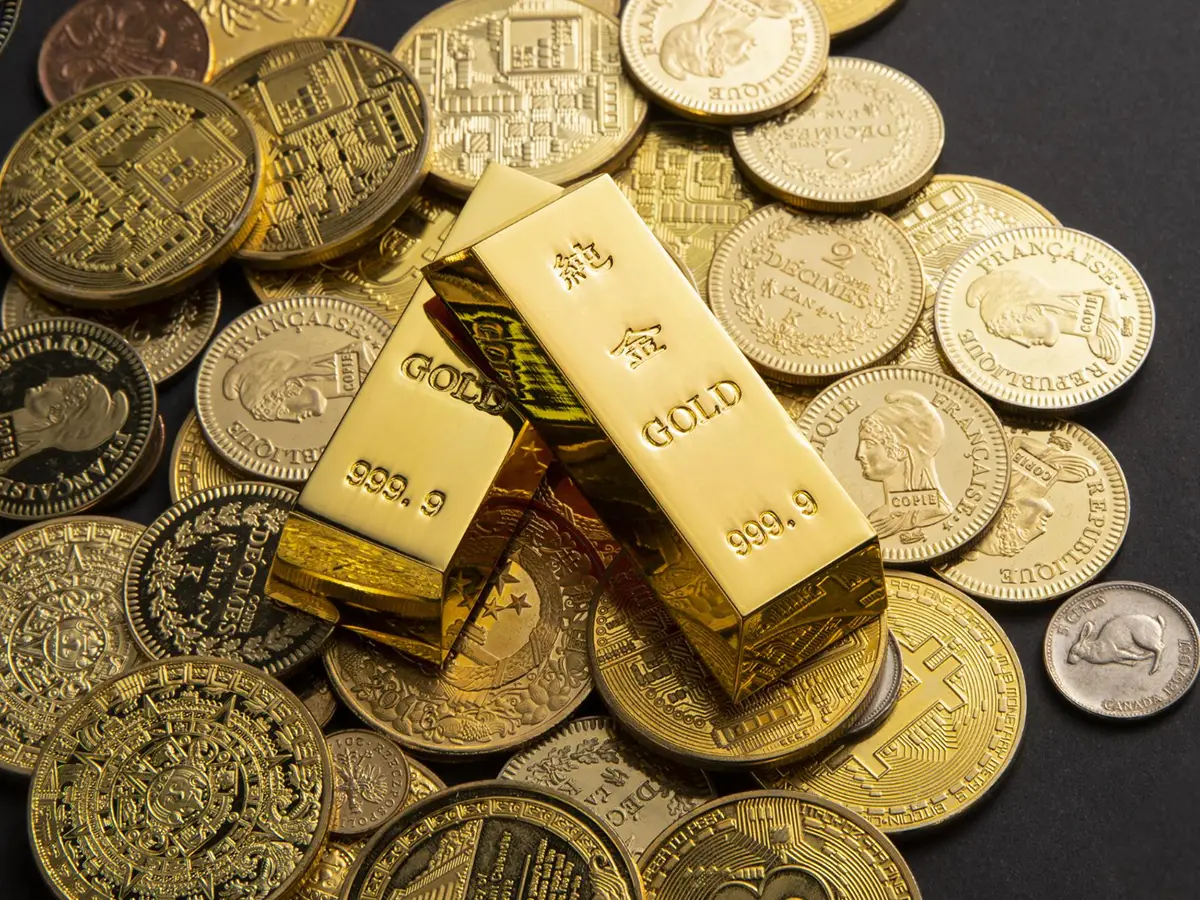
Because in 2022, America froze Russia's dollar reserves. That was the moment when every country on Earth got the message loud and clear: your money in an American bank isn't actually yours if America decides it doesn't like you.
It doesn't matter if you agree with the decision to freeze Russia's assets or not. What matters is the precedent. Every central bank in the world saw that and thought, "We need assets that nobody can turn off with a phone call."
That's why we're seeing a mass exodus from paper assets—Treasury bonds, dollar reserves—into things that physically exist and can't be confiscated remotely. We're shifting from a system based on "trust in America" to a system based on "trust in physics." Gold doesn't care about politics. Neither does oil, or wheat, or copper.
This is the end of what economists call America's "exorbitant privilege"—the ability to print money that the whole world has to accept. That privilege is dying, and when it's gone, our standard of living is going to take a serious hit.
The Digital Cage They're Building
While everyone argues about Bitcoin, central banks around the world are developing something called CBDCs—Central Bank Digital Currencies. And the difference between Bitcoin and CBDCs is the difference between freedom and slavery.

A central banker in France said it clearly at Davos: "We trust the central bank more than algorithms." What he really meant was, "We want programmable money that we control."
Think about what programmable money actually means. Your money could have an expiration date—spend it this month or it vanishes. You could be blocked from buying certain things based on your carbon footprint or your social credit score. If you say something the government doesn't like, they could turn off your ability to buy food.
This isn't science fiction. The technology exists right now. China already has a version of this system running. And Western governments are watching closely to see if they can implement something similar.
The next major battle isn't just economic—it's about whether money will be a tool for freedom or a tool for control. Cash, gold, and Bitcoin represent the freedom side. CBDCs represent total surveillance and compliance.
What If This Is All Deliberate?
There's a theory I keep coming back to, and I can't dismiss it: what if this is a controlled demolition?
If you wanted to force the world into a new digital monetary system, if you wanted to impose austerity and make people accept lower living standards, you'd need a crisis big enough to make them desperate. Wars, pandemics, inflation, supply chain breakdowns—these aren't solutions to problems, they're the problems that justify the solutions.
Look at Venezuela. One of the most resource-rich countries on the planet, with more oil than Saudi Arabia. And now people are eating from trash cans because their monetary system collapsed. That's not a natural disaster. That's what happens when you rely entirely on paper money and forget about actual production.

I'm not saying there's a smoke-filled room where all these people coordinate. But I am saying that when you see the same patterns repeating—create crisis, offer solution, expand control—you have to at least consider that this might not all be accidental incompetence.
What This Means for You
This isn't fear-mongering, and I'm not trying to scare you. I'm trying to get you to see patterns that are visible to anyone who's paying attention.
The system that made your parents comfortable is dead. A single income used to support a family. A college degree used to guarantee a good job. Saving money in a bank account used to mean something. None of that is true anymore, and it's not coming back.
New rules are being written right now, while most people are still trying to play by the old ones. The people who understand what's happening will position themselves accordingly. They'll hold real assets, develop skills that matter in any economy, and build resilience that doesn't depend on the system working the way it used to.
The people who don't understand will keep wondering why they're working harder and falling further behind. They'll blame themselves, or their generation, or bad luck. They won't see that the game itself has changed.
I'm not here to tell you exactly what to do with your money or your life. But I am telling you to stop believing the comfortable stories about how everything will return to normal if we just get through this rough patch. There is no normal to return to. We're watching the birth of something entirely new, and it's going to be painful for people who aren't prepared.
The question isn't whether the Great Collapse is coming. The question is whether you'll see it before it's too late.
