


The dollar has lost 98% of its purchasing power since Nixon ended the gold standard in 1971. Your savings account is bleeding value while you sleep, and everyone knows it. So the question becomes: what do you actually buy to protect yourself? The debate usually comes down to gold versus Bitcoin, and people get weirdly tribal about it. Gold bugs call Bitcoin a scam. Bitcoin maximalists call gold a pet rock. I think they're both missing the point.
The real answer isn't picking one or the other. It's understanding what each one does well, what it does poorly, and owning both in proportions that match your actual situation.
Let me explain why neither side has this right.

Gold Does What It's Always Done
Gold has a 5,000-year track record. It survived the fall of Rome, the collapse of every empire since, and every hyperinflation crisis in human history. When paper currencies go to zero—and they always eventually do—gold is still there. That's not philosophy. That's just historical fact.
Central banks understand this better than anyone. In 2024 alone, they bought 1,045 tonnes of gold. China, Russia, India, Turkey, Poland—they're not buying gold because they think it's going to 10x. They're buying it because it's the only asset that can't be printed, hacked, or turned off by someone else. When you hold physical gold, you own it. There's no counterparty risk. No one can freeze your account or tell you that you can't access it.
Gold also works without electricity or internet. If the grid goes down, if payment systems stop working, if banks lock their doors—gold still functions. You can walk into almost any country on Earth with a gold coin and exchange it for local currency or goods. That kind of universal recognition took thousands of years to build, and it's not going away.
But gold has real problems that people don't like talking about.
It's heavy. If you need to move wealth quickly across borders, gold is a nightmare. It's expensive to store securely—you either pay for a safe deposit box or you risk keeping it at home where it can be stolen. And here's the uncomfortable historical reality: governments have confiscated gold before. In 1933, FDR signed Executive Order 6102, making it illegal for Americans to own gold. They had to turn it in. If you think "that could never happen again," you're not paying attention to how governments behave during crises.
Gold also doesn't produce income. It sits there. It doesn't pay dividends or interest. Its only job is to hold value, which it does well, but you're not getting yield on it.
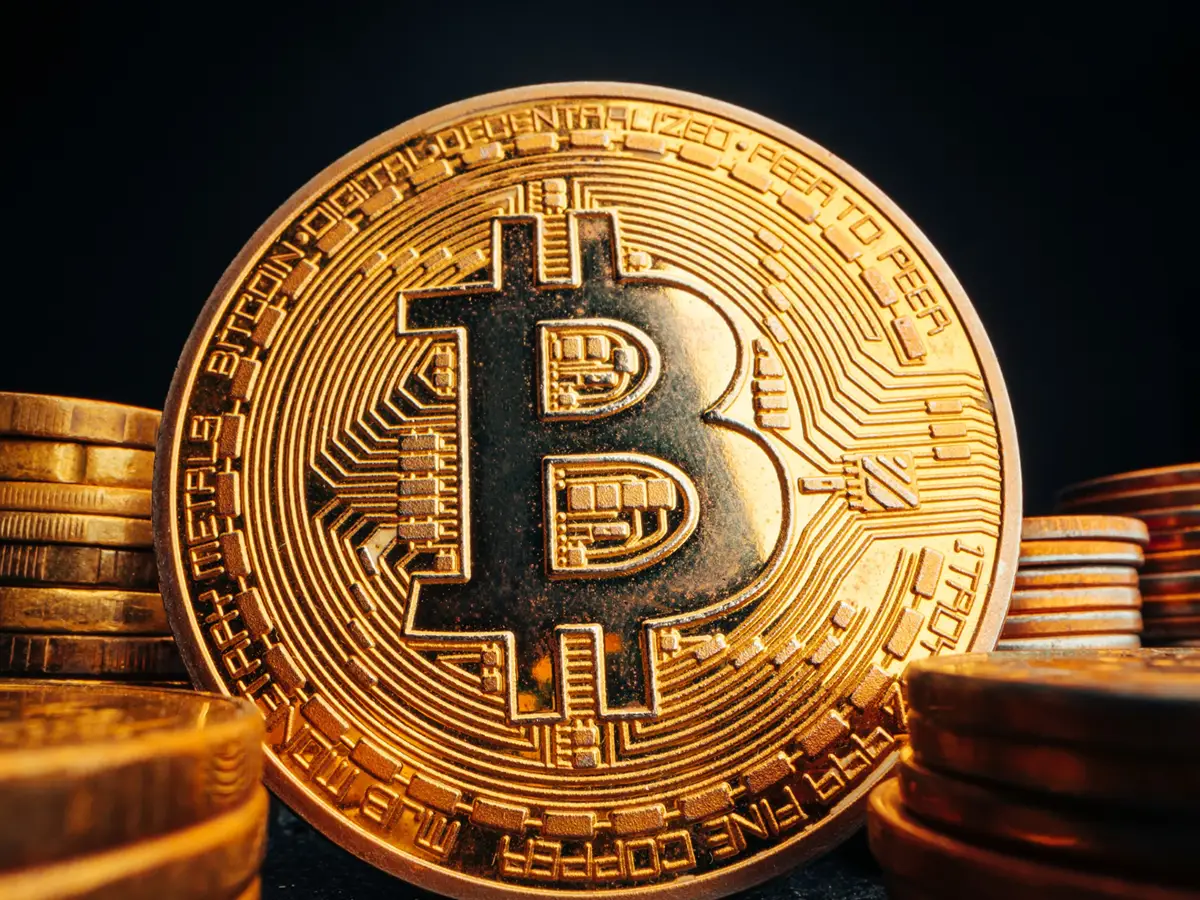
Bitcoin Does Something Different
Bitcoin is only 15 years old, which in the context of money is basically nothing. But it does a few things that gold physically cannot do.
First, it has a fixed supply. There will only ever be 21 million Bitcoin. That's enforced mathematically by the protocol, not by trust in a central authority. No one can print more. No government can inflate the supply. It's digital scarcity in a world where every fiat currency can be created infinitely.
Second, it's incredibly mobile. You can move millions of dollars worth of Bitcoin across the world in minutes for a tiny fee. You just need an internet connection and your private keys. Try doing that with gold bars. This matters if you're in a country experiencing capital controls, hyperinflation, or authoritarian overreach. Bitcoin gives you an exit that gold doesn't.
Third, it's hard to confiscate. If you hold your own Bitcoin in a properly secured wallet, no one can take it from you without your private keys. Governments can shut down exchanges, they can make it harder to convert Bitcoin to dollars, but they can't actually seize Bitcoin that you control. That's fundamentally different from gold, which can be physically taken.
The younger generation also sees Bitcoin differently than older people do. To them, it's digital gold. They trust math and cryptography more than they trust central banks. Whether you agree with that or not, it's a real shift in perception that's not going away.
But Bitcoin has its own set of serious problems.
It's only been around since 2009. Gold has survived 5,000 years of human civilization. Bitcoin has survived one bull market, one bear market, and a few regulatory scares. We don't know how it performs during a true systemic collapse because it's never been through one.
It requires electricity and internet. If the grid goes down or the internet stops working, Bitcoin becomes temporarily useless. You can't hand someone a Bitcoin in a blackout. This is a real vulnerability that gold doesn't have.
Bitcoin is also insanely volatile. It can drop 50% in a few months and everyone holding it just has to stomach that. Gold moves, but nothing like Bitcoin. If you're using Bitcoin to protect wealth, you need to be able to handle watching your net worth swing wildly.
And here's the thing most people don't understand: most people who "own" Bitcoin don't actually own it. They have Bitcoin on Coinbase or another exchange. That's not the same as holding your own keys in a wallet you control. If the exchange gets hacked, goes bankrupt, or the government forces it to freeze accounts, your Bitcoin is gone. If you're going to own Bitcoin, you need to actually take custody of it. Otherwise, you're just trusting another institution, which defeats the entire point.

What Actually Happened When Things Broke
Theory is one thing. Let's look at what actually happened in recent crises.
In Venezuela, when the bolivar collapsed and inflation hit the millions of percent, people used both gold and Bitcoin. Gold worked in local transactions. Bitcoin worked for moving money out of the country or preserving value digitally. Both were better than holding bolivars, which became worthless.
When Cyprus had its banking crisis in 2013 and the government seized money directly from people's bank accounts—what's called a "bail-in"—Bitcoin adoption surged. People realized their money in a bank wasn't actually theirs. Gold couldn't move fast enough. Bitcoin could.
When Russia got hit with sanctions in 2022 and had $300 billion in reserves frozen, Bitcoin became a way for Russians to move money internationally when traditional channels were blocked. Gold couldn't cross borders easily under those conditions. Bitcoin could.
In Turkey, where inflation has been running high for years, people hold both gold (which has cultural significance there) and Bitcoin as hedges against the lira. They're not choosing one or the other. They're using both.
The pattern is clear: people use whatever tool solves their specific problem in their specific situation. There's no universal answer because the threats aren't universal.
The Real Answer Nobody Wants to Hear
Here's what I actually think after looking at this honestly.
If you're worried about slow, grinding dollar devaluation—the kind we're experiencing right now where prices keep going up and your paycheck buys less every year—both gold and Bitcoin work. They both outpace dollar inflation over time. Gold does it steadily and predictably. Bitcoin does it explosively with massive volatility.
If you need to move wealth across borders quickly or you're worried about government confiscation, Bitcoin is better. It's designed for that. Gold is heavy, slow, and can be seized at checkpoints.
If you're worried about a grid-down scenario, a total internet collapse, or some kind of apocalyptic breakdown, gold wins. Bitcoin becomes temporarily useless without infrastructure. Gold doesn't care.
If you're older and have accumulated significant wealth, gold probably makes more sense as the larger allocation. It's stable, it's boring, and it lets you sleep at night.
If you're younger and have time to ride out volatility, Bitcoin makes sense as a higher-risk, higher-reward hedge. You can afford to watch it swing because you have decades ahead of you.
But here's the thing: why does it have to be one or the other?
The smartest move is probably owning both in whatever ratio makes sense for your situation. Maybe that's 60% gold, 30% Bitcoin, 10% cash. Maybe it's 50/50. Maybe it's 80/20 in either direction. It depends on your age, your risk tolerance, your technical competence with Bitcoin, and what specific threats you're most worried about.
The biggest mistake isn't picking the wrong one. The biggest mistake is staying 100% in dollars and hoping everything works out. That's not a strategy. That's just inertia.
And if you do buy gold or Bitcoin, make sure you actually own it. Not a gold ETF. Not Bitcoin on an exchange. Physical gold in your possession or Bitcoin in a wallet where you control the keys. If you don't physically control it, you don't own it. You own a promise from someone else, and promises break during crises.
I think gold is proven and solid but has limitations. I think Bitcoin is revolutionary and powerful but unproven over long time horizons. I'd rather hedge both directions than bet everything on being right about which one wins.
That's not exciting. It's not ideological. But it's honest. And in a world where everyone's trying to sell you certainty, honesty might be the most valuable thing you can get.
