

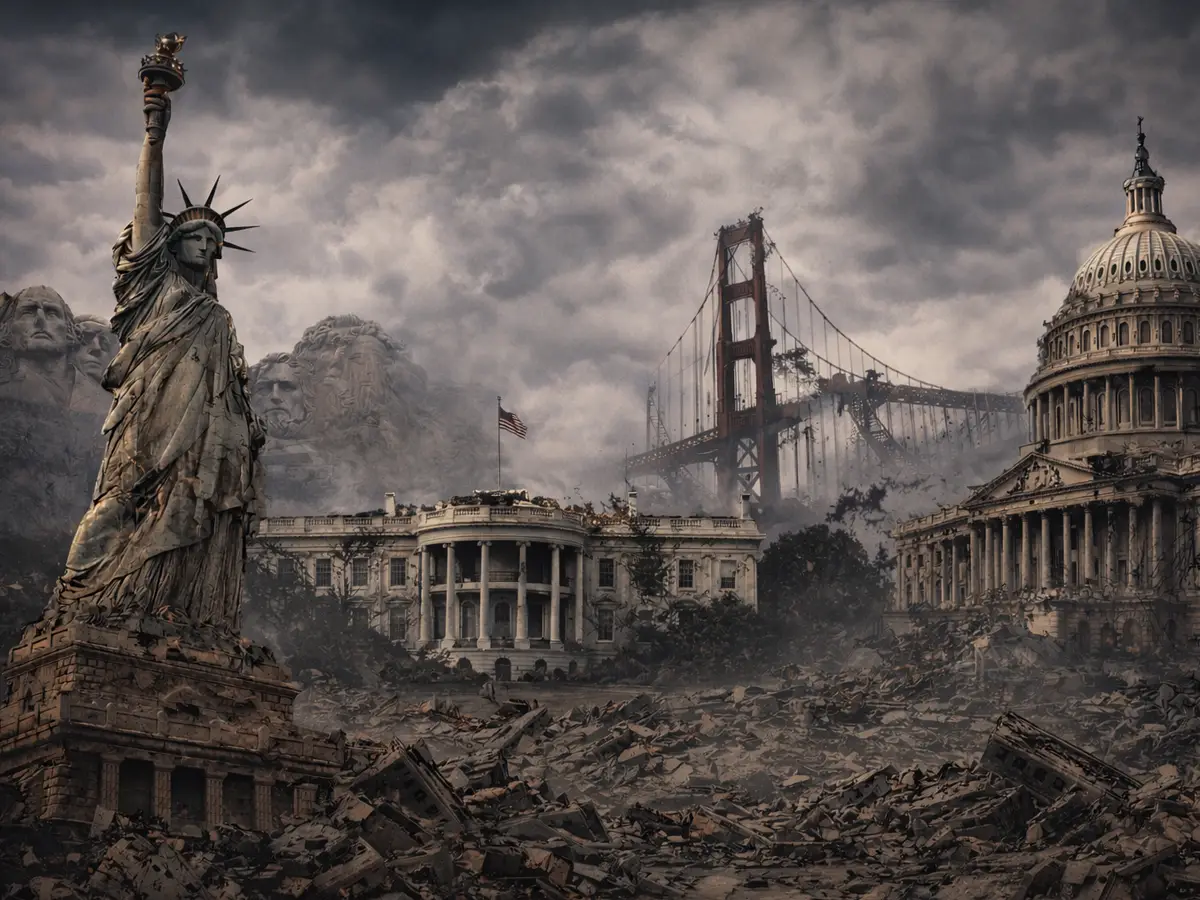
People keep asking: Who wants to destroy America? The question assumes someone planned this decline. But here’s the truth: nobody planned it. What we’re watching is the result of short-term thinking, competing interests, and tradeoffs no coalition wants to make.
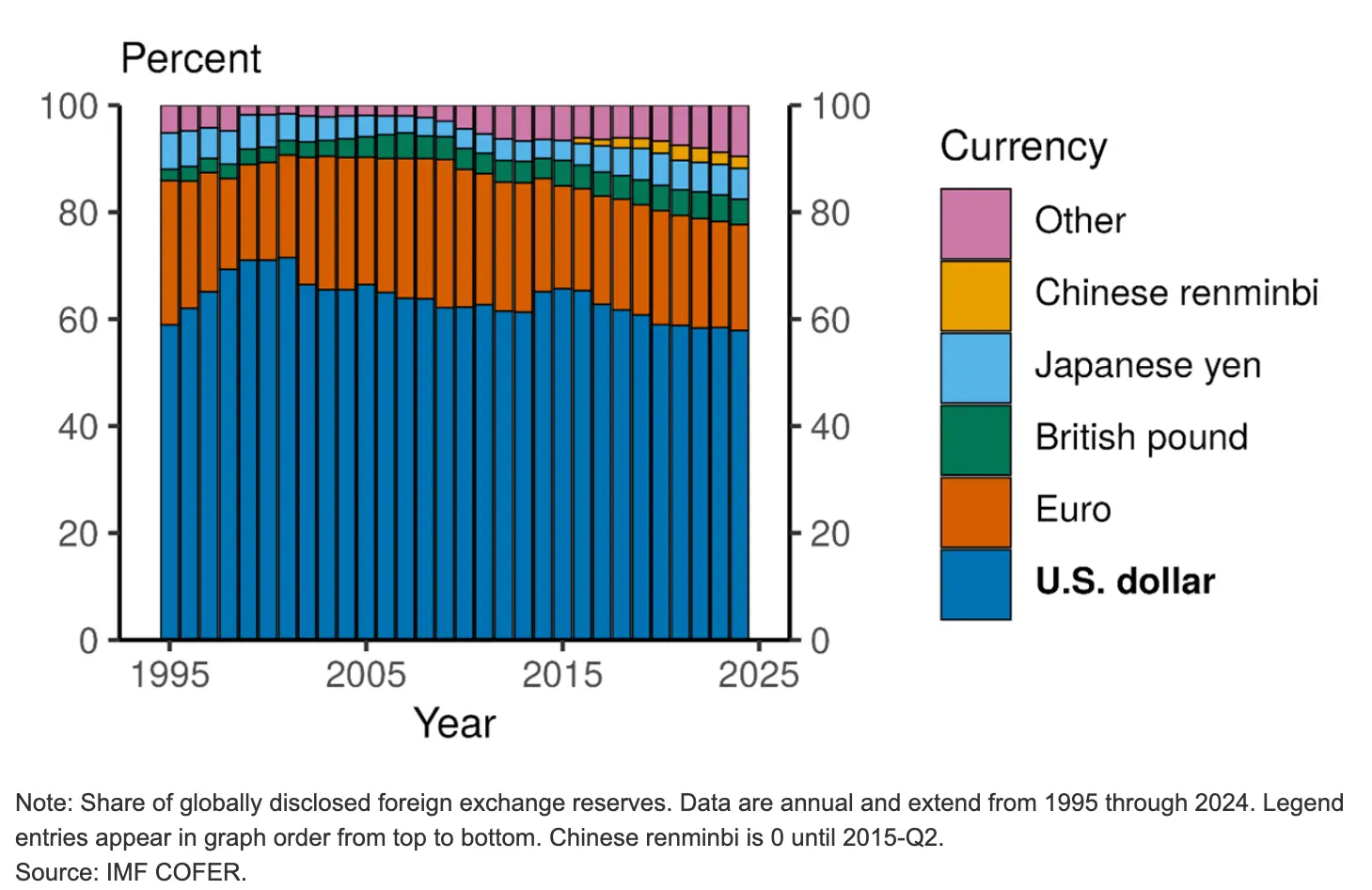
Look at what’s happening: federal payrolls are being cut and more reductions are being discussed, while the debt load keeps climbing. At the same time, the dollar’s share of global reserves has been drifting down—from about 71% in 2000 to the mid-50s today. China and other blocs are openly working toward a world that relies less on the dollar. So why would American leaders allow moves that weaken American power?
Here’s the uncomfortable answer: no one is steering — but it’s happening anyway.
The Question Everyone's Asking
If America Is Getting Weaker, What's the Plan?
From the outside, it looks planned:
- Federal payrolls shrinking, with more cuts being discussed
- Dollar losing its power (71% to 57% of world reserves)
- China and other blocs are actively building alternatives to dollar dominance
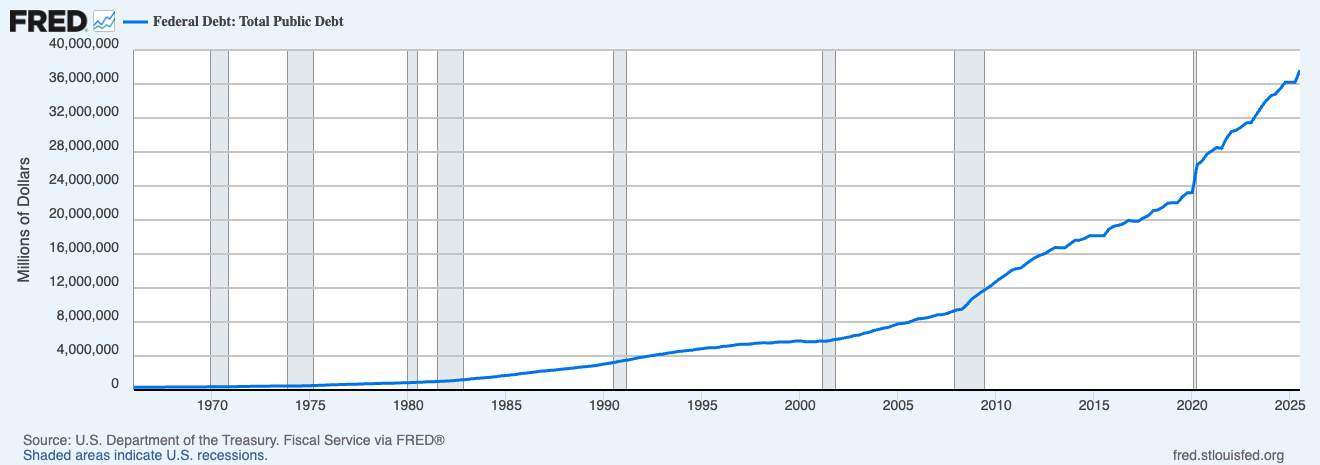
- $36 trillion in debt with $2 trillion added each year
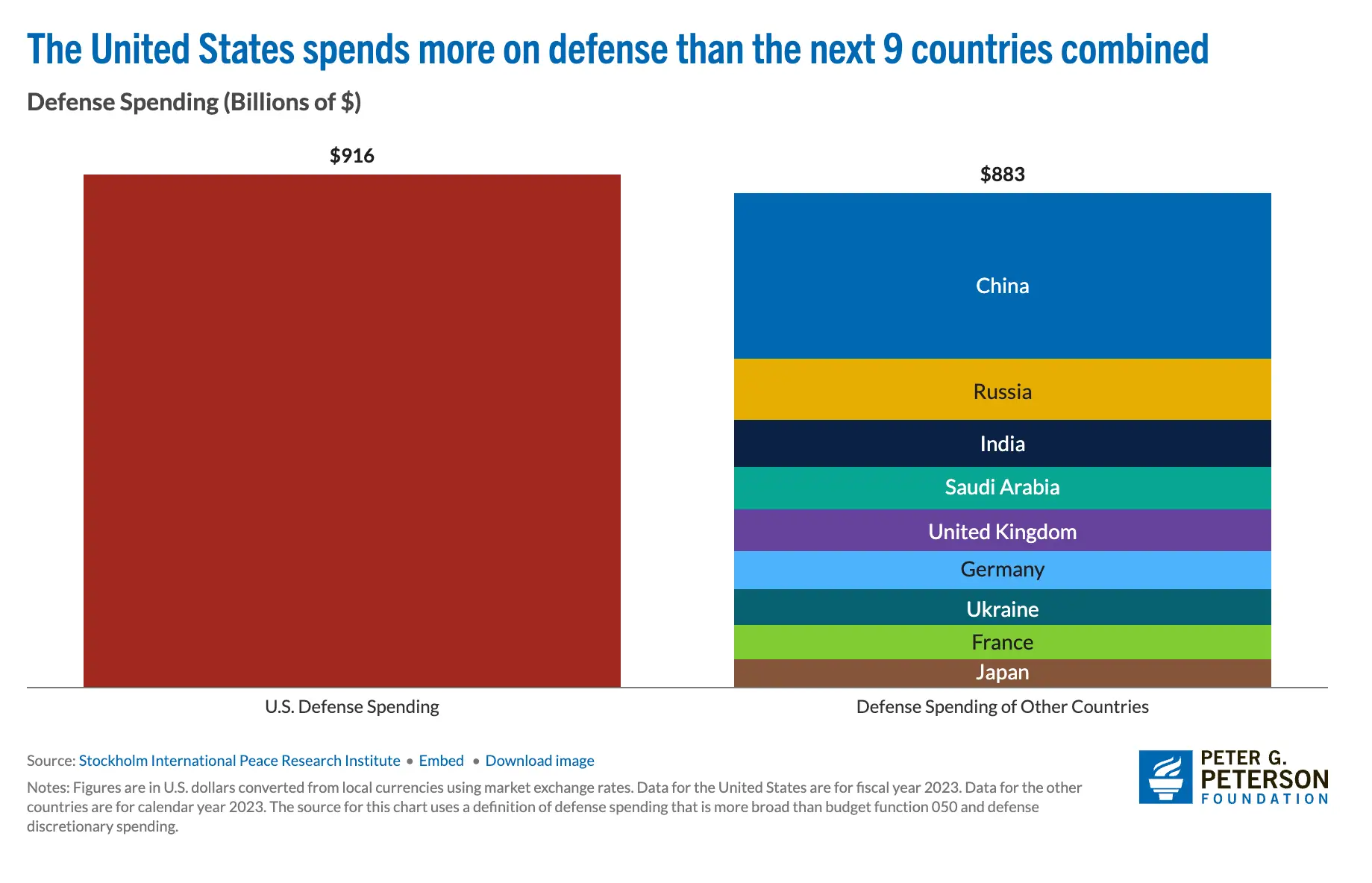
- Roads and bridges falling apart while military spending tops $900 billion
It makes sense to think someone wants this. After all, don't rich Americans benefit from American power? Why would they destroy the system that makes them rich?
The answer is simpler than conspiracy. To understand it, we need to look at how empires actually fall.
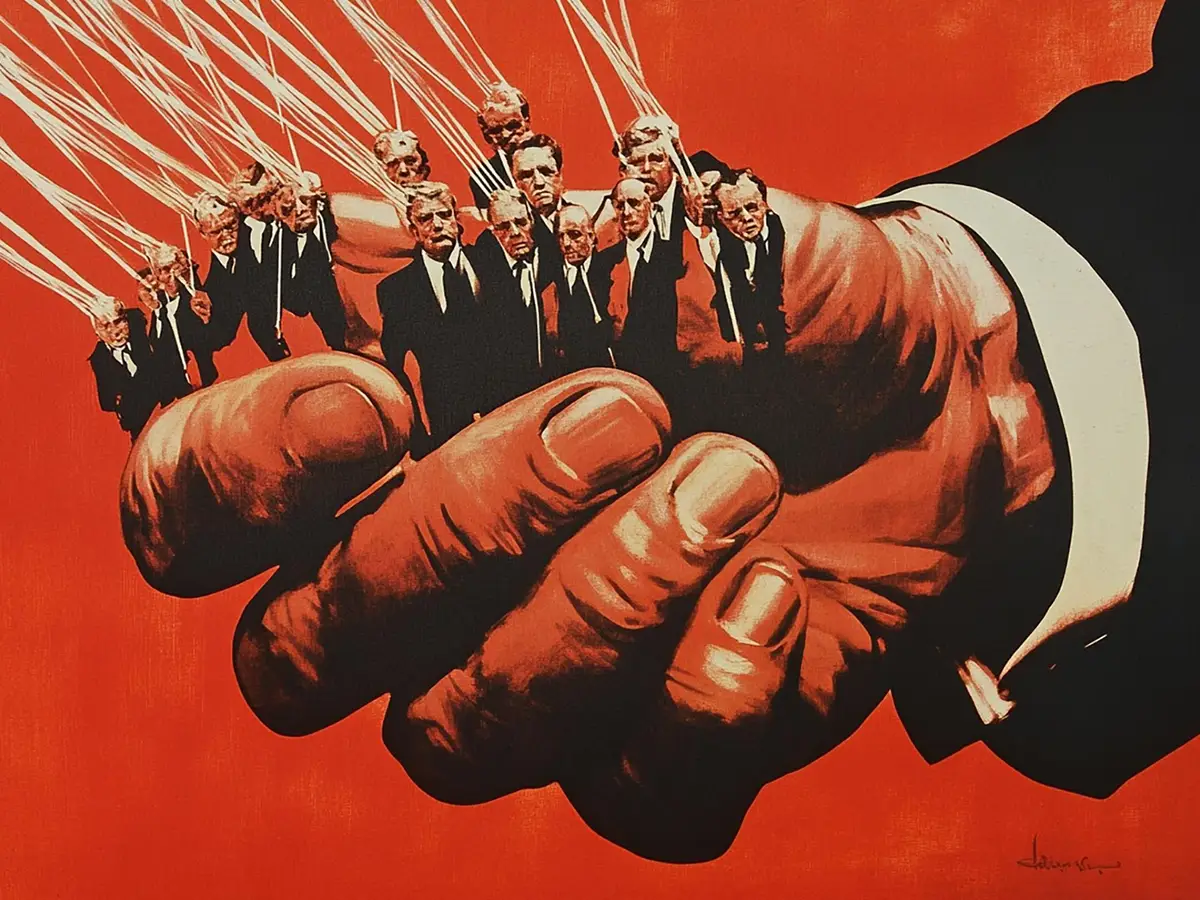
There Is No Master Plan
How Competing Groups Are Breaking Things
Think about a successful family business. The founder’s grandkids now run it—and they fight about everything. One wants to cut costs. Another wants to grow fast. A third only cares about this quarter’s profits. Everyone pulls money toward their own priorities. Nobody wants to make the hard tradeoffs. Debt piles up. The business slowly fails.
Did they want to destroy it? No. Did they destroy it anyway? Yes.
That’s America right now. Four major forces shape policy—and they all want different outcomes:
The Cost Cutters
Goal: Slash government spending and shrink the federal workforce.
Why: Ideological belief in small government mixed with genuine concern about unsustainable debt.
Result: Large-scale workforce reductions and hiring constraints shrink the federal footprint, with additional cuts and restructuring on the table. Government services degrade—especially in federal-dependent regions like Maryland, DC, and Virginia—dragging down the local economy, shrinking the tax base, and keeping deficits stubborn anyway.
The Military-Industrial Complex
Goal: Keep defense spending at empire levels even as America pulls back globally.
Why: Defense contractor profits, existing global commitments and a vast network of overseas bases, political fear of looking "weak," and genuine competition with China.
Result: $900+ billion military budget every year—even as America retreats from global commitments. We’re spending at superpower scale while our influence shrinks. Paying to maintain bases and weapons systems worldwide we can't effectively use. All cost, diminishing benefit.
The Financial Sector
Goal: Maximize profits from the current dollar system while quietly positioning for whatever comes next.
Why: They’re borderless—returns come first. They benefit from dollar dominance today, but they’re always positioning for whatever regime comes next.
Result: They profit from the dollar system while it lasts, but quietly diversify across currencies, commodities, and non-dollar rails. They lobby to protect the current system, while building optionality if confidence shifts. If the dollar’s dominance erodes faster than expected, they’ll adapt first—because they’re paid to see the turn early.
The Politicians
Goal: Win the next election.
Why: Power, fundraising, and staying in office.
Result: Short-term incentives dominate every decision. Promise everything, deliver convenient half-measures. Avoid reforms that cause immediate pain—even if they prevent long-term damage. Push every hard choice to the next administration. Make the problem worse while claiming to fix it.
Key insight
None of these groups want America to fail. But their competing priorities, pursued simultaneously without coordination, drive failure. It's not conspiracy—it's chaos with a downward trajectory.

The Math Doesn't Work
Why They Can't Stop It: The Debt Trap
Here's where math beats politics. The U.S. government faces numbers that don't add up:
- Total debt: $36 trillion
- Added each year: $2 trillion
- Net interest: nearing $1 trillion annually, projected to keep rising (often cited around $1.8T by the mid-2030s)
Just the interest—the cost of past borrowing—is nearing $1 trillion a year. It’s now one of the largest line items in the federal budget, competing with major categories like defense and healthcare. That’s before any new programs—just the carrying cost of old debt.
This creates two choices, and both lead to disaster:
Choice A: Keep Spending
- Federal workers keep their jobs
- Government services continue
- Roads and bridges get fixed
- BUT: Debt grows out of control
- END RESULT: Borrowing gets more expensive as buyers demand higher yields—and the system starts leaning harder on inflation, money creation, or forced austerity.
Choice B: Cut Spending
- Debt grows slower
- Looks responsible on paper
- BUT: Federal workers lose jobs
- Economy shrinks (especially in MD, DC, VA)
- Shrinking economy = weaker tax revenue
- END RESULT: Recession hits, and the deficit stays high anyway
They lean toward Choice B because Choice A risks a confidence shock. But Choice B creates its own crisis—just slower and more political. It’s like choosing between a heart attack now or organ failure later.
That’s the doom loop: every “solution” breaks something else, and the interest bill keeps tightening the trap.

This Has Happened Before
History shows us this pattern. Not a perfect match—just the same incentives repeating in different forms.
Rome (3rd-5th Century)
Did Roman leaders want Rome to fall? No way. Their wealth and power depended on the empire staying strong.
But here's what they did:
- Debased the currency to fund spending (fueling inflation)
- Spread military too thin trying to hold the empire together
- Raised taxes to pay for military and government
- Fought civil wars over who should be in charge
- Deferred maintenance on roads and infrastructure as costs rose
- Elites insulated themselves while public spaces deteriorated
Sound familiar? Each choice made sense by itself. Each group looked out for themselves. Nobody planned the fall. But Rome fell anyway.
British Empire (1945-1970s)
Did British leaders want their empire to end? No. Britain had ruled a quarter of the world.
Here's what happened:
- Britain was financially exhausted after WWII and relied heavily on U.S. support and loans
- The empire became too expensive to maintain
- Sterling lost global primacy as the dollar took the lead
- Britain gave up colonies across India, Africa, and the Middle East
- Britain tried to stay relevant through alliances and a continued military footprint
- Britain remained a major country but was no longer a superpower
The big lesson: Britain didn't plan to lose empire status. They lost it because they couldn't afford it anymore. The U.S. loaned them money, then took their spot as global leader. Sound familiar?
The American connection: China is doing what rising powers do—building trade ties, lending influence, and creating alternatives to dollar-centered systems. The difference is the U.S. is weakening itself from the inside, which can speed up the transition.
Soviet Union (1980s-1991)
Did Soviet leaders want their country to collapse? Obviously not.
Here's what happened:
- Economic stagnation turned into breakdown
- Tried to keep up with U.S. military (couldn't afford it)
- Leader tried reforms to save the system
- Those reforms destabilized a system that was already brittle
- Collapsed in 1991
The big lesson: Their leader was trying to save the Soviet Union. His fixes destroyed it. Not because he was bad at his job, but because the system was already broken beyond repair.
The American connection: Every administration says it’s “saving” America. Many of the moves that feel necessary in the moment can still accelerate decline—because the underlying constraints (debt, obligations, and institutional mistrust) don’t respond to slogans.

Who Actually Wins?
Maybe Nobody—Not Even China
A lot of people think China is behind this—that they're taking America down to become the new superpower. But it's not that simple.
China isn't attacking America. They're protecting themselves:
- Building non-dollar payment rails and settlement options
- Expanding trade in local currencies where it’s practical
- Reducing exposure to U.S. sanctions risk and dollar chokepoints
- Diversifying reserves and partners instead of betting on one system
And they're not alone:
BRICS and other non-aligned blocs (expanding):
- Building additional payment networks and trade channels that reduce dollar dependence
- Increasing local-currency trade where it lowers friction (yuan, rupees, etc.)
- Expanding parallel institutions and lending options alongside the IMF/World Bank
- More countries exploring closer alignment as the bloc evolves
GCC countries (Saudi Arabia, UAE, etc.):
- Exploring non-dollar settlement options for some energy trade
- Gradually diversifying reserves rather than holding only dollars
- Over time, even small shifts reduce automatic dollar demand at the margin
From their view: "We're not trying to destroy America. We're just not betting everything on America staying strong forever. That's smart."
The result: The dollar loses power not from a coordinated attack, but from rational diversification. When the dollar becomes a tool of leverage, other countries build backup plans. That’s not war—it’s risk management.
So What Happens Next?
The Transition to Multi-Polar World: 2026–2035
This isn’t a “possible scenario”—the shift is already underway. The question isn’t if America’s dominance erodes, but how fast and how messy.
What we know for certain:
- Dollar reserve share has trended down from ~71% (2000) to the mid-50s today
- More countries are building backup payment rails and local-currency trade channels
- Some energy trade is experimenting with non-dollar settlement options
- Major powers are diversifying away from single-system dependence
- Federal payrolls shrinking while debt continues to grow
The most likely path: Managed Decline (2026–2035)
What happens:
- Dollar share continues drifting down (potentially toward the 45–50% range over the next decade)
- U.S. becomes one major power among several (U.S., China, EU, India, and others)
- Federal government stays smaller for an extended period
- Economy weakens especially in Maryland, Virginia, DC
- Military still large but can't be everywhere at once
- Infrastructure keeps deteriorating, wealth gap widens
- America stays powerful regionally but loses global dominance
Think: Britain after WWII. Still important, still wealthy, but no longer the boss. One major player among several instead of the hegemon.
The wildcard: Could it happen faster? (2028–2032)
If something breaks the system early:
- Major creditors reduce Treasury exposure faster than expected
- Dollar shock: reserve share drops faster than expected over a short window
- Bad recession or depression
- Social unrest, political chaos
- Government forced to make emergency cuts
- Federal/state friction and governance strain
Think: Soviet collapse, but slower. Not a clean breakup, but grinding loss of federal power, services, and money.
The Best-Case Counterargument (Steelman)
There is a path where America stabilizes without a dramatic collapse:
- Productivity accelerates (AI, robotics, energy)
- Real wage growth returns and tax receipts rise
- Entitlement reforms happen gradually instead of in a panic
- Debt growth slows while inflation stays contained
- Immigration and labor participation lift the working base
But decline still looks “default” for one reason: every fix requires coordinated tradeoffs—higher taxes, lower benefits, less spending, or slower growth—and the political system is built to avoid short-term pain.

What This Means for Regular People
If There's No Plan, How Do You Prepare?
Knowing there's no master plan doesn't make things better—it makes them worse.
With a plan, you could predict what happens next. Without a plan, you're dealing with chaos that's generally heading downward.
Here's what this means for different groups:
For People in Vulnerable Sectors
Federal workers, tech employees, and anyone in AI-disrupted industries face similar problems:
- Don't count on your job coming back if it's cut
- Even a ‘slow decline’ can mean government and many companies stay smaller for a long time
- AI is pressuring jobs across many sectors—not just tech (customer service, accounting, legal research, content creation, data entry, even parts of medical diagnostics)
- Tech has already gone through multiple layoff waves (big tech and startups)
- Think about learning skills that can't be easily automated or outsourced
- Geographic flexibility becomes an advantage
- Having multiple income streams matters more than job security
The shift: We're not in a temporary downturn. The structure of the economy is changing. Jobs that disappear now might not come back—ever.
For People in Federal Job Areas
The Washington DC area (Maryland, Virginia, DC) faces unique problems. With federal payrolls shrinking and contractors feeling it too and thousands more contractors and businesses that depend on federal spending, the whole economy is tied to federal government health.
What this means:
- Housing prices tied to federal jobs will have big problems
- Recovery could take longer than 2008—and may feel uneven for years
- The economic base is changing forever, not just having a bad year
- Think about whether staying makes sense long-term
- Local businesses dependent on federal workers will struggle
- Weaker tax base = worse local services = less support for premium housing prices
Reality check: If you own a home in the DMV, a big part of your bet is federal employment stabilizing. That assumption looks less certain over time.
For Average Americans
What changes first isn’t flags or speeches — it’s daily life.
- Your money stretches less over time as costs outpace wages
- Public services degrade (infrastructure, schools, safety net) because budgets get squeezed
- Politics gets uglier as more groups fight over a smaller pie
- Volatility becomes normal: layoffs, price spikes, and regional downturns come in waves
What to do (practical, not paranoid):
- Build a bigger cash buffer than you used to need
- Reduce payment obligations (debt = fragility)
- Develop skills tied to real demand (healthcare, trades, operations, sales, compliance, security, repair)
- Create at least one extra income stream
- Invest in local relationships — in unstable periods, networks beat credentials
For People Who Can Move Countries
If you have the option to leave, the calculation changes:
- Getting a second passport isn't crazy anymore—it's smart diversification
- Putting all your money in dollars is risky
- Timing when to leave matters more than in stable times
- In real crises, governments can restrict capital flows—so if you want optionality, plan early rather than in a panic
- Countries with strong fundamentals, low debt, and growing economies offer better long-term prospects
- Being internationally mobile becomes a competitive advantage
Key insight: The wealthy already have exit plans. Second passports. Money in multiple currencies. Property in stable countries. They're not planning to destroy America—they're planning to protect themselves when it declines. That should tell you something.
Warning Signs the Transition Is Accelerating
Watch for multiple signals stacking at once:
- Food bank lines getting longer
- Visible increase in homelessness in your area
- More frequent protests and public disorder
- Local governments cutting services and delaying maintenance
- Police/fire response times increasing noticeably
- Schools cutting programs, teachers leaving
- Infrastructure visibly deteriorating (potholes, bridge closures, water problems)
- Stores closing in middle-class areas
- Your neighbors talking about leaving
When you see several of these at once, decline is accelerating. Plan accordingly.
The bottom line: You can’t stop imperial decline. But you can position yourself and your family to handle it better than people who pretend nothing is changing.
The Bottom Line
Why Empires Fall
Nobody is trying to ‘destroy America.’ But America is weakening itself through debt it struggles to manage, competing groups fighting each other, short-term thinking, and math that doesn’t work.
It's not a conspiracy. It's just decline.
History repeats the same pattern:
- Rome didn’t plan to fall. Neither did the Soviet Union. Neither did Britain.
- Each tried to patch problems that had outgrown their tools
- Leaders thought they were saving the system
- Their “rational” choices compounded into decline
The real question isn't 'Who planned this?' The real question is 'What do you do when you realize nobody's in control?'
Understanding that there's no master plan—no adults making careful decisions to manage American power—should change how you think about the future. If you’re waiting for “them” to figure it out, you’re betting on coordination that rarely shows up in time.
The multi-polar transition is already happening:
- Dollar reserve share has trended down from ~71% (2000) to the mid-50s today
- More countries are building backup payment rails and local-currency trade channels
- Some energy trade is experimenting with non-dollar settlement options
- China continues pushing for greater global use of the renminbi
- Federal payrolls are shrinking while debt and obligations keep rising
This isn’t a distant scenario—the transition is underway. The question is speed, severity, and how it shows up in daily life.
Empires don’t fall because someone wants them to. They fall when the forces that made them powerful start working against them. America’s pressures—debt growth, rising interest costs, high global commitments, and short-term politics fighting long-term stability—have reached a point where the system resists easy fixes.
That's not conspiracy. That's just math, history, and human nature working together in ways we've seen before.
The decline is real, and it isn’t coordinated. It’s the predictable outcome of debt, incentives, and institutions that can’t accept short-term pain to avoid long-term damage.
So the question isn’t “who did this?” It’s: what do you do when you realize nobody is steering? Position your household around resilience—lower fragility, higher optionality, and fewer assumptions that the old normal returns on schedule.
